
The Pantry Savvy Approach: Why Simple Cooking Beats Complicated Recipes
Simple cooking is powerful. Learn how Pantry Savvy helps you enjoy better meals without the stress of complicated recipes or long ingredient lists.

TL;DR
- In the U.S., food waste is estimated at about 30 to 40 percent of the food supply, so small household habits can have a real payoff.
- On cost, estimates vary by method, but range from about $1,500 per year for a family of four (USDA) to almost $3,000 per year (EPA), which is why practical, low-effort routines matter.
- The five habits below focus on avoiding duplicate purchases, using older food first, and making “no extra trip” meals easier to pull off on busy nights.
Pantry habits that pay off
Habit: Inventory before you shop and write your list around real meals. The fastest win is simply looking in your refrigerator, freezer, and pantry before shopping, then planning meals for the week and buying only what you need for those meals. This prevents duplicate buys and lowers the odds that perishable food gets forgotten. Mini-recipe: Use-what-you-have bean bowls. Warm a can of beans with chili powder and cumin, serve over rice or tortilla chips, then top with any “almost done” salsa, shredded cheese, or greens that need using. This turns pantry staples into dinner and can replace a last-minute store run.
Habit: Create a “use first” spot you check daily. A small, visible zone in the fridge or pantry for “eat me soon” items makes the right choice easier when you are tired. EPA specifically recommends making a list of what needs to be used up and planning upcoming meals around it, and it points out that near-the-end produce and odds and ends can still be repurposed into soups, stir fries, frittatas, sauces, and more. Mini-recipe: Use-first frittata. Sauté soft vegetables, add leftover cooked potatoes or rice, pour in beaten eggs, and bake until set. It uses small amounts that often get wasted and turns them into a full meal.
Habit: Rotate with FIFO so older food gets used first. FIFO means “first in, first out,” and it is a practical way to make sure older items are used before newer ones. When you unpack groceries, place new cans, pasta, and snacks behind older ones so the older items stay in front and get used first. Mini-recipe: FIFO chickpea salad. Grab your oldest can of chickpeas, mash half with mayo or yogurt plus mustard, salt, and pepper, then fold in the rest. Add chopped pickles or onion if you have them. Serve on toast or crackers for a quick lunch that “spends down” pantry inventory.
Habit: Label and date what you open or cook, then store it where you can see it. Confusion and uncertainty are a major driver of household waste, so the habit here is not perfection. It is making food easy to identify and easy to use. USDA notes that confusion about date labels can lead people to discard wholesome food, and EPA recommends refrigerating or freezing leftovers in clear, labeled containers with dates. Second Harvest of Silicon Valley similarly emphasizes labeling and dating leftovers so you know when to use them. Mini-recipe: Leftover “grain plus veg” soup. Put a cup or two of leftover rice, quinoa, or pasta into broth (or water plus bouillon), add any cooked or raw vegetables that need using, simmer until tender, then finish with lemon juice or a splash of vinegar. Label the container with the date so it gets eaten, not forgotten.
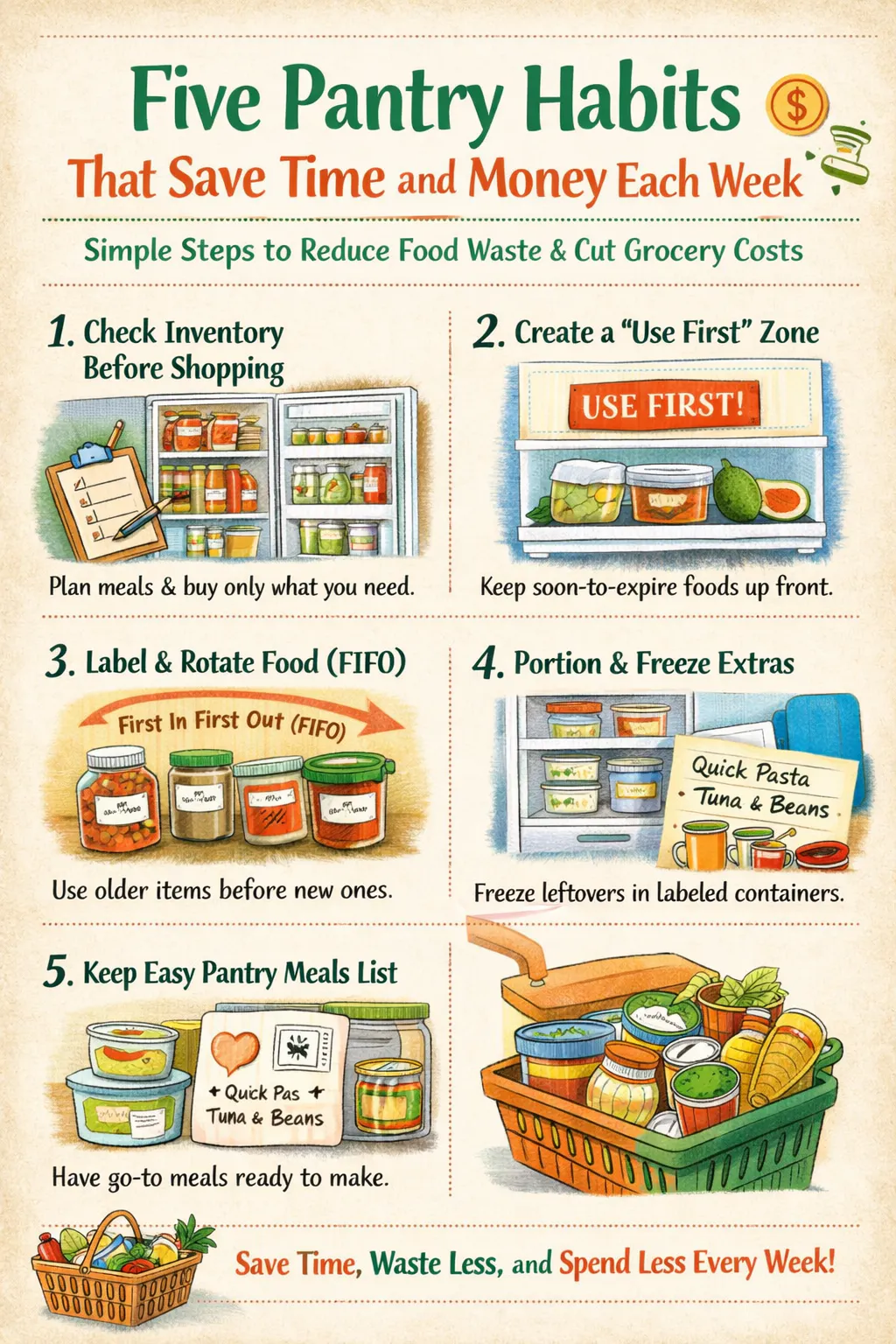
Habit: Keep a short list of three “no-plan pantry dinners” and repeat them. EPA recommends keeping a running list of meals your household already enjoys so you can easily choose, shop for, and prepare meals you are likely to consume. This is a time saver because it reduces decision fatigue on weekday evenings, and it is a money saver because it reduces “nothing to eat” takeout moments. Mini-recipe: Pantry pasta (tomatoes plus pantry add-ins). Bon Appétit notes that if you have a can of tomatoes, a jar of peperoncini, and Parmesan, you are already halfway to a satisfying pasta dinner, and Serious Eats describes pasta al tonno as easy, fast, and pantry-friendly using canned tuna and tomato.
Quick comparison and realistic savings ranges
Comparison summary (table and chart summarized): Inventory-before-shopping and the “use first” zone tend to be the highest impact, lowest effort habits because they reduce duplicate purchases and prevent produce from being forgotten. FIFO rotation and simple labeling are very low difficulty and mainly protect against slow, invisible losses like expired pantry items and mystery leftovers. Keeping three “no-plan pantry dinners” is also low difficulty, and it mainly saves time and money by preventing extra trips and takeout when you are busy.
Estimated weekly savings (conservative and optimistic):
A conservative, widely cited baseline from USDA is about $1,500 per year of uneaten food for a family of four, which is roughly $29 per week. EPA’s consumer-facing estimate is higher at almost $3,000 per year, and it states that a family of four could save up to $56 per week by throwing away less food. A practical way to interpret this range is: if these habits help you prevent even one “wasted produce bag” week (conservative) or avoid multiple forgotten items plus a takeout night (optimistic), the savings can land somewhere between roughly $25 to $60 per week, depending on your starting waste level and shopping patterns.
For time, EPA explicitly notes that making a list with weekly meals in mind can save time, and the common mechanism is fewer extra store trips plus fewer last-minute decisions. A conservative expectation for many households is about 30 to 60 minutes per week saved, with an optimistic range of 60 to 120 minutes per week if you currently do frequent “emergency” grocery runs or last-minute meal scrambling.
Summary
Food waste is common enough that even basic pantry routines can matter, and national estimates show it can cost households meaningful money each year. The five habits here are intentionally low effort: check what you have before shopping, keep a visible “use first” zone, rotate with FIFO, label and date leftovers so they get eaten, and rely on three repeatable pantry dinners. Together, they reduce duplicate purchases and forgotten food while making weeknight cooking simpler for everyday home cooks.
Ready to turn an idea into dinner?
Browse recipes by ingredient, meal type, or cooking time.